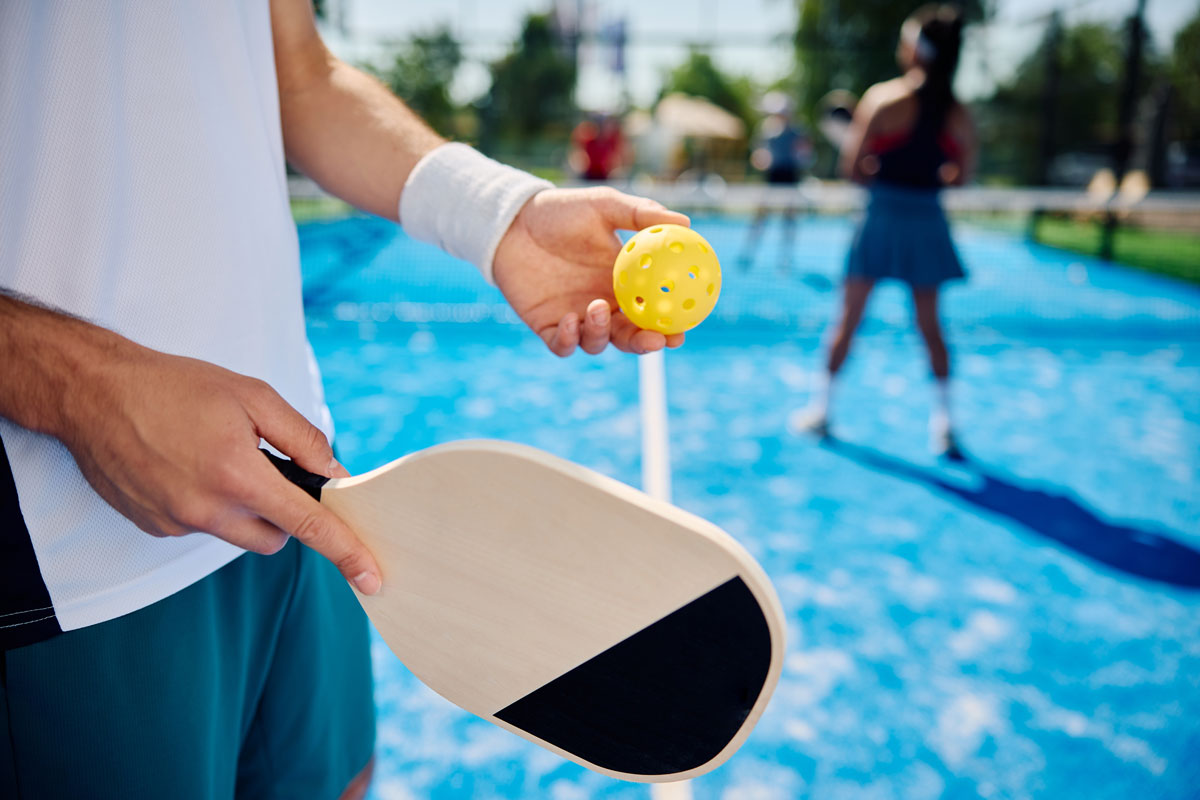

Pickleball is a racquet sport that combines elements of tennis, badminton, and table tennis. Played on a smaller court, it requires quick lateral movements, pivoting, jumping, and repetitive arm motions. It’s essential to understand the physical demands of the game to better appreciate the potential risks involved.
What are the most common Pickleball Injuries?
Ankle Sprains & Strains
The quick lateral movements and abrupt changes in direction put significant stress on the ankles, making sprains and strains common occurrences in pickleball. These injuries can vary in severity, from minor discomfort to complete ligament tears.
Knee Injuries
Pickleball involves frequent squatting, jumping, and sudden stops, which can lead to knee injuries like tendonitis, meniscus tears, or ligament strains.
Shoulder Tendonitis
The repetitive overhead motions required for serves and smashes can cause inflammation and strain on the shoulder tendons, leading to tendonitis.
Elbow Epicondylitis (Tennis Elbow)
Like tennis, pickleball players are susceptible to tennis elbow, which is characterized by pain and inflammation in the outer part of the elbow.
Wrist Injuries
The quick and forceful wrist movements during gameplay can lead to wrist sprains or strains.
Lower Back Pain
Poor body mechanics, such as incorrect bending and twisting during play, can contribute to lower back pain.
How Can I Prevent Pickleball Injuries?
Warm-Up and Cool-Down
Strengthening Exercises
Balance and Stability Training
Improving balance and stability through exercises like single-leg stands can enhance your on-court performance and minimize the risk of ankle and knee injuries.
Proper Footwear
Invest in supportive, non-slip footwear designed for court sports. Shoes with good ankle and arch support can significantly reduce the risk of ankle sprains.
Use of Protective Gear
Consider wearing compression sleeves, braces, or tape on vulnerable joints to provide extra support and prevent injuries.
Technique and Form
Work with a coach to learn proper techniques for different shots and movements in pickleball. Correct form can help minimize strain on your body and improve your overall performance.
Stay Hydrated
Proper hydration is essential for overall health and can aid in preventing muscle cramps and strains.
Listen to Your Body
Pay attention to any signs of discomfort or pain during play. Ignoring these signals can lead to more severe injuries. If you experience persistent pain, consult an orthopaedic sports medicine specialist promptly.
Rest and Recovery
Give your body adequate time to rest and recover between intense pickleball sessions. Overtraining can lead to overuse injuries.
Pickleball Injury Management and Rehabilitation
R.I.C.E. Method
For acute injuries like sprains and strains, follow the R.I.C.E. method: Rest, Ice, Compression, and Elevation. This can help reduce swelling and promote healing.
Seek Medical Attention
If you experience severe pain, instability, or inability to bear weight, consult a orthopaedic sports medicine specialist for proper evaluation and treatment. We offer same or next day appointments and our Ortho Injury Walk-in Clinic in Tradition is open Monday – Friday 8 a.m. – 6 p.m. &
Saturday 8 a.m. – 2 p.m.
Physical Therapy
Participation in a structured physical therapy program as directed by your orthopaedic doctor can help you regain strength, flexibility, and function after an injury.
Gradual Return to Play
Don’t rush back into the game after an injury. Follow your orthopaedic doctor’s advice and engage in a gradual return-to-play plan to avoid re-injury.